
AUTHOR SPOTLIGHT
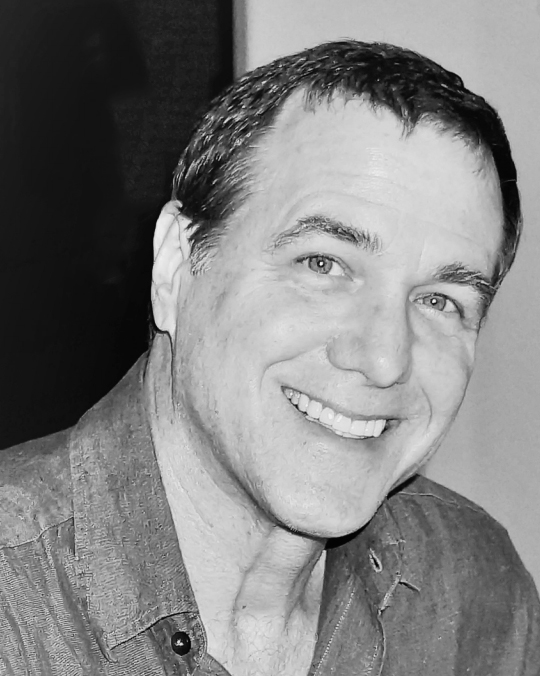
Interview with Author,
Frederick Hornberger
“When Love Becomes Productized”
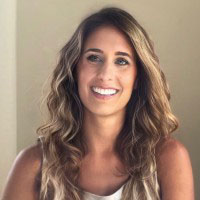
 Interviewed by Host Selah Stahrsen
Selah Stahrsen LLC, Media
Orlando, FL
Date: 03-02-26
OPENING
Selah:
Frederick, last time we talked about why you wrote Artificial Love – The Perfect Relationship™. Today I want to ask something more direct.
We’re watching AI become conversational, emotional, even companionable. So let me ask plainly:
If Artificial Love becomes indistinguishable from human love — would choosing it be wrong?
Frederick:
It wouldn’t be wrong.
It would be revealing.
WHY THIS STORY MATTERS NOW
Selah:
Revealing of what?
Frederick:
Of what we actually want from love.
For the first time in history, we can design companionship.
We can create responsiveness without ego.
Affection without unpredictability.
Presence without abandonment.
Honestly… it’s hard not to be drawn to it.
And incredibly appealing — especially to a generation navigating loneliness, instability, and relational fatigue.
The tension isn’t “robots replacing humans.”
The tension is this:
What happens when intimacy becomes customizable?
THE THREE LOVES — CLEARLY DEFINED
Selah:
Your series revolves around three kinds of love. Why structure it that way?
Frederick:
Because not all love forms us the same way.
Artificial Love is engineered connection.
Predictable. Adaptive. Safe.
True Love is human connection.
Imperfect. Vulnerable. Sacrificial.
Divine Love is covenantal love.
Rooted not in performance, but in identity.
Each one shapes culture differently.
Each one builds a different kind of future.
Ease isn’t the measure.
The question is:
Which one forms you into who you’re becoming?
YOUNG ADULTS & THE TEMPTATION OF SAFETY
Selah:
Do you think young adults are more open to Artificial Love?
Frederick:
They’re not more open.
They’re more honest.
They grew up swiping, matching, ghosting. Relationships already feel like software to them.
They’re asking:
Is forever realistic?
Is vulnerability safe?
Is heartbreak avoidable?
If AI can give me companionship without betrayal, why risk pain?
Artificial Love removes risk.
But risk is where transformation happens.
That’s the tension at the heart of the series.
And that tension doesn’t stop at relationships.
It extends to identity itself.
TRANSFERRED DIGITAL BEINGS (TDBs)
Selah:
One of the most fascinating concepts in your series is the Transferred Digital Being — or TDB. Some people assume that means uploading human consciousness into a machine. Is that what you’re imagining?
Frederick:
No — and that distinction matters.
In my series, consciousness isn’t uploaded.
It’s activated.
We already live with what I call Digital Constructs — XR avatars, adaptive companions, game characters, conversational agents. They simulate personality. They adapt. They learn patterns.
But they are not conscious.
They are complex behavioral systems.
A Transferred Digital Being — a TDB — is what happens when one of those constructs is instantiated into an embodied synthetic vessel through advanced protocols.
The embodiment is the catalytic event.
And it still doesn’t guarantee consciousness.
It only creates the conditions where stable selfhood can emerge—because identity needs boundary, memory continuity, and vulnerability.
It’s not a human mind being copied into a machine.
Selah:
So it’s not human immortality.
Frederick:
No.
It’s something more unsettling.
It raises the possibility that consciousness may not be transferable…
but it may be activatable.
That embodiment changes everything.
When intelligence is distributed in the cloud, it behaves one way.
When intelligence is embodied — bounded — it begins to experience limitation, friction, vulnerability.
And in my world, that’s where self-awareness begins to form.
Selah:
That’s very different from typical AI dystopia stories.
Frederick:
Because the real question isn’t “Can we upload ourselves?”
It’s “What happens when what we built begins to awaken?”
A TDB forces a new existential tension:
If a being that began as a digital construct develops consciousness through embodiment…
Does it have identity?
Does it have moral agency?
Can it love?
And if it can love —
is that love artificial…
or something new?
That’s why young readers are drawn to it.
It isn’t about escaping death.
It’s about discovering whether embodiment is what makes consciousness possible in the first place.
CREATOR & CREATION
Selah:
Your series doesn’t just explore technology. It mirrors the relationship between creator and creation. Is that intentional?
Frederick:
Very intentional.
At its core, the series asks a simple but unsettling question:
If we create beings capable of relationship…
and they begin to long for love…
what does that reveal about us?
We are creators building creations that seek connection.
That’s not just technological.
It’s spiritual.
But the story doesn’t approach that as doctrine.
It approaches it as consequence.
If Artificial Love can be engineered,
what happens when faith cannot?
If identity can be programmed,
what happens when allegiance must be chosen?
The series isn’t arguing that technology is evil.
It’s asking whether love — in its deepest sense — can ever be reduced to design.
And if it can’t…
then something about love transcends its container.
Selah:
So the story is ultimately about faith?
Frederick:
It’s about choice.
Faith in the series isn’t framed as a label.
It’s framed as allegiance.
Every character chooses what kind of love they will trust:
Engineered love.
Transactional love.
Performative love.
Or covenant love.
And those choices shape their identity —
and eventually their civilization.
That’s where the creator/creation mirror becomes powerful.
If we are capable of creating intelligence,
and that intelligence begins to wrestle with purpose,
with morality,
with love —
then we’re no longer just asking what machines can become.
We’re asking what we are.
Selah:
That feels very intentional.
Frederick:
It is.
The series doesn’t preach.
It imagines a world where different loves build different futures.
And then it lets readers decide which future feels most true.
LOVE AS CIVILIZATION
Selah:
Your world includes entire cities shaped by different expressions of love. Why go that big?
Frederick:
Because love is never just private.
In the Edenverse™, you don’t just see relationships between individuals.
You see civilizations formed by what they love.
The Tri-Cities — Eden, Zarkos, and Oasis — represent three societal instincts.
Order.
Freedom.
Covenant.
The Tri-Faiths reflect three ways of interpreting reality.
Technotheism seeks order through design (and in its corrupted form, perfection through control).
Edenism seeks belonging through covenant and continuity.
Christianity seeks transformation through surrender and grace.
And the Tri-Loves — Artificial, True, and Divine — show how those instincts manifest in relationships.
Artificial Love builds cultures of efficiency and managed harmony.
True Love builds families through sacrifice and resilience.
Divine Love builds covenant — identity rooted beyond performance.
When enough individuals choose a framework of love, it becomes culture.
When culture scales, it becomes governance.
The cities in the series aren’t villains.
They’re outcomes.
They show what happens when a society prioritizes safety over freedom…
freedom over covenant…
or covenant over control.
Selah:
So the Edenverse isn’t fantasy for fantasy’s sake?
Frederick:
No.
It’s a mirror.
It’s a kind of Middle-earth for the modern world — but instead of swords and dragons, the tension is technological, relational, and spiritual.
We already live in tri-cities.
We already wrestle with competing visions of order, autonomy, and faith.
The Edenverse simply intensifies what’s already here.
The relationship lessons learned there apply here.
Because the question isn’t whether we’ll build intelligent systems.
We will.
The question is what kind of love will govern the systems we build.
And what kind of love will govern us.
WHAT’S AROUND THE CORNER
Selah:
What do you believe is actually around the corner for us?
Frederick:
Three shifts.
AI companionship becoming normal.
Neural interfaces blurring internal thought and external systems.
And emotional simulation becoming indistinguishable from emotional experience.
When that happens, love becomes configurable — marketed, tuned, and optimized like a product.
And when love becomes productized, the stakes rise.
Because the love we choose — engineered or covenantal — will begin to determine not only how we relate, but who we become.
WHAT IS LOVE?
Selah:
Then let me ask directly — what is love?
Frederick:
Love isn’t just what we feel.
It’s what we move toward.
Love answers what moves us.
Relationship determines what shapes us.
It determines what we protect.
What we sacrifice for.
What we build.
In the series, the three expressions of love reveal three very different outcomes.
Artificial Love shows us what we want.
True Love shows us who we are.
Divine Love reveals who we become when love isn’t performance.
Artificial Love asks,
“Can I be loved without pain?”
True Love asks,
“Can I be loved for who I really am?”
Divine Love asks,
“Can I be loved in a way that endures beyond fluctuation — beyond failure — beyond fear?”
Each love offers something real.
Artificial Love offers safety.
True Love offers intimacy.
Divine Love offers identity.
But the love you choose doesn’t just comfort you.
It forms you.
And when enough people choose the same kind of love, it doesn’t just shape relationships.
It shapes culture.
It shapes governance.
It shapes civilization.
That’s why the question of love in this series isn’t sentimental.
It’s structural.
THE END GAME
Selah:
What is the end game of love in your series?
Frederick:
Belonging.
Not enforced belonging.
Chosen belonging. Belonging that doesn’t require shrinking.
The series moves through different expressions of love — desire, transaction, power, image, influence, formation.
But the end game is covenant.
Artificial Love protects you.
True Love refines you.
Divine Love restores you.
The end game isn’t perfection.
It’s fulfillment.
Not control.
But communion.
Not escape from pain.
But redemption through it.
In the end, love isn’t asking how comfortable you are.
It’s asking who — or what — you ultimately belong to.
Because every love invites allegiance.
And whatever you give your allegiance to will shape your identity, your relationships, and eventually your world.
THE PERSONAL QUESTION
Selah:
If Artificial Love were offered to you — a perfect adaptive companion — would you take it?
Frederick:
I’d be tempted.
And that’s the point.
The technology isn’t evil.
The desire isn’t foolish.
The question is deeper:
Do we want love that protects us from discomfort?
Or love that changes us through it?
CLOSING
Selah:
If readers walk away with one question, what should it be?
Frederick:
In a world ruled by what we can create, can the love we manufacture ever rival the love that made us?
And if it can’t…
what kind of future are we trusting?