
AUTHOR SPOTLIGHT
A Conversation with
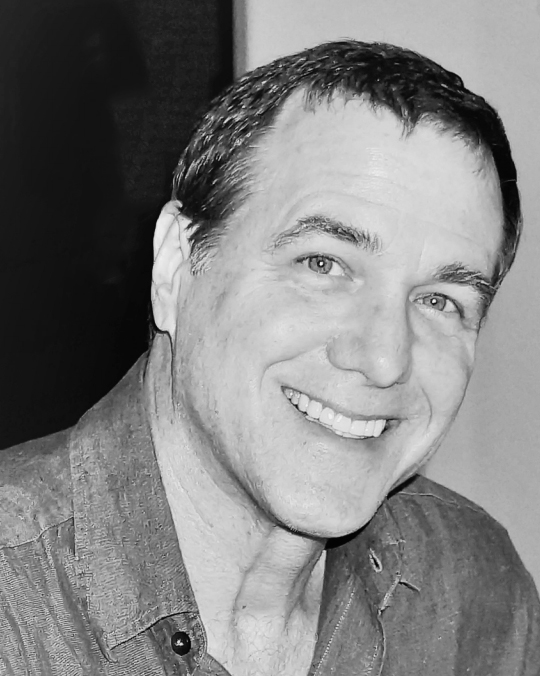
Frederick Hornberger
“Artificial Love – The Perfect Relationship”
 Interviewed by Host Selah Stahrsen
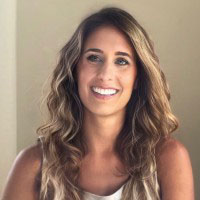
Selah Stahrsen LLC, Media
Orlando, FL
Date: 4-25-24
AUTHOR SPOTLIGHT
A Conversation with Frederick Hornberger
Selah:
Welcome to Author Spotlight, where we talk with writers whose stories grow out of real lives and real questions. Today I’m joined by Frederick Hornberger, author of Artificial Love – The Perfect Relationship™. Frederick, thank you for being here.
Frederick:
Thank you, Selah. I’m grateful to be here.
EARLY FORMATION
Selah:
Before we talk about the book, I want to understand you. Were you always drawn to storytelling?
Frederick:
I loved writing when I was younger, but I didn’t imagine it as my future. What captured me first was electricity.
My grandfather was an electrical engineer, and his workshop felt like something out of a storybook. He had what I can only describe as a Willy Wonka–style workshop — wires, coils, glowing tubes, motors humming to life. As a child, it felt like magic. But it wasn’t magic. It was design.
That space shaped me. It sparked a lifelong fascination not just with power, but with what power enables — creation, transformation, motion.
That fascination never left.
TECHNOLOGY AND PERSPECTIVE
Selah:
So, technology came first?
Frederick:
In many ways, yes. I studied electrical engineering in college because it felt like a natural extension of that early wonder.
But right out of college, during a job interview of all places, I had a personal faith encounter that shifted something inside me. I didn’t stop loving technology — I just stopped believing it could answer everything.
For decades, I worked in consulting and executive recruiting. Writing stayed dormant. I assumed it was something I might return to someday.
I didn’t realize the story had already started forming.
THE MOMENT THE STORY ARRIVED
Selah:
What changed?
Frederick:
One quiet morning, my wife and I were praying together. There was no plan — just stillness.
And a phrase surfaced with unusual clarity:
Only one wish.
Not a plot. Not characters. Just that idea. What if someone were given a single wish — and had to live with the consequences?
That question wouldn’t leave me. I began writing immediately
DISCOVERING WHAT PEOPLE REALLY WANT
Selah:
Did you know then that it would become this larger universe?
Frederick:
Not at all. At first, I thought I was writing a simple character story.
But as I explored the idea of a wish, I began asking a deeper question: What do people actually wish for most?
Across cultures, ages, and circumstances, the answer kept surfacing:
Love.
Not success. Not fame. Not control.
Love — and the fear of losing it.
That realization reshaped everything.
And beneath it was a harder realization:
We don’t just want love.
We want a love that lasts.
And the more I followed that question, the clearer it became—
what we choose to love doesn’t just shape our relationships…
it quietly shapes the direction of our lives—and eventually, the world we build.
And we keep failing to hold onto it.
HOW AI ENTERED THE STORY
Selah:
So how did artificial intelligence become part of that exploration?
Frederick:
It felt inevitable
I had always been fascinated by technology. But watching AI accelerate in real time changed the tone of that fascination.
At the same time, my son was studying artificial intelligence at Carnegie Mellon. We had long conversations — not theoretical, but deeply personal — about identity, relationships, and what connection might look like in a world of intelligent machines.
AI wasn’t just advancing. It was beginning to relate.
Chatbots. Virtual companions. Adaptive personalities. Emotional simulation.
I realized something striking: the same technology that once powered industry was now beginning to offer what people want most — a form of love that feels safe.
That’s when the story truly became Artificial Love.
NOT SCIENCE FICTION — SOCIAL REALITY
Selah:
Some might call this science fiction.
Frederick:
I don’t think it is anymore.
We already see people forming attachments to digital personalities. We already see connection designed to feel safe — responsive without requiring vulnerability.
The tension in the story isn’t robots replacing humans.
It’s this:
What happens when love can be customized?
What happens when connection feels effortless—
but doesn’t teach us how to make love last?
Because when love becomes something we can design—
we’re no longer just changing relationships…
we’re changing what kind of future those relationships will create.
THE THREE LOVES
Selah:
Your series revolves around three kinds of love. Was that intentional?
Frederick:
Very much so.
The story explores three ways people try to make love work:
- Artificial Love — designed connection.
Engineered to remove risk, prevent failure, and make love feel stable and secure. - Human Love — chosen connection.
Imperfect, vulnerable, and sustained through honesty, sacrifice, and the willingness to keep choosing it. - Divine Love — received connection.
Not engineered or earned, but encountered—restoring what we cannot sustain on our own.
- Each love forms identity differently.
- And when enough people choose the same kind of love—
- it doesn’t just shape individuals.
- It builds a different kind of world.
- The question isn’t which one feels easiest.
The question is:
Which one actually allows love to last?
THE CITIES AND CONSEQUENCES
Selah:
The three cities — Eden, Zarkos, Oasis — feel symbolic.
Frederick:
They are, but they’re sincere.
None of them are villains. Each preserves something valuable
- One values order and alignment.
- One values freedom and exploration.
- One values covenant and continuity.
But over time, every civilization reveals what it trusts most—
because civilizations are ultimately built on what they love
The story isn’t about defeating evil systems.
It’s about revealing what different kinds of love produce over time—and whether they can actually last.
INFLUENCE OF C.S. LEWIS
Selah:
You’ve mentioned C.S. Lewis before. How did he influence you?
Frederick:
Lewis didn’t argue first. He imagined first.
He built worlds where ideas had consequences.
That deeply shaped me.
I didn’t want to write a sermon. I wanted to write a story where different loves lead to different outcomes — and let the audience draw their own conclusions.
Imagination can sometimes reach where argument cannot.
WHY CHRISTMAS RETURNS
Selah:
Christmas appears throughout the series. Why?
Frederick:
Because Christmas is already about relationship.
It’s culturally shared, even among people who don’t share the same beliefs.
It allowed the story to feel intimate and human without explanation. The Christmas scenes aren’t about doctrine. They’re about convergence — relationships standing together despite tension.
That felt honest to life.
WHY THIS STORY MATTERS NOW
Selah:
Why does this story matter today?
Frederick:
Because we are the first generation able to simulate intimacy at scale.
We can receive constant affirmation. Instant responsiveness. Adaptive empathy.
But when life demands patience, forgiveness, or sacrifice, simulated connection may not carry the weight.
Artificial Love doesn’t invent new desires.
It reflects what we already long for — belonging, intimacy, significance.
The story asks:
- Do we want a love that protects us?
- Or a love that can actually last?
That question isn’t religious.
It’s human.
And in a world where love can be simulated, optimized, and scaled—
the future won’t be decided by the technology we build…
but by what we choose to love through it.
FINAL THOUGHT
Selah:
If readers take one thing with them, what do you hope it is?
Frederick:
That the perfect relationship isn’t something you discover fully formed.
It’s something that forms you.
Choice by choice.
Cost by cost.
Over time.
And if love is going to last, it will require more from us than comfort.
Before we give ourselves to any kind of love—human, artificial, or otherwise—we should ask not only what it offers us…
but whether it can truly endure—
and who it’s shaping us to become.
Because in the end—
the future isn’t shaped by what we create…
but by what we give our hearts to.
Selah:
Frederick, thank you for your honesty and insight.
Frederick:
Thank you, Selah. I appreciate the conversation.
Selah:
And thank you to our audience. I’m Selah Stahrsen, and this has been Author Spotlight — where every story begins with a deeper question.
Interview with the Author – Artificial Love
Frederick C. Hornberger, Jr. is one of the leading executive recruiters in the nation for Board Member, CEO, and President placement within the Construction Industry